414-276-5700 608-276-5700 800-DURRANI

The Death of Arrabally: BIA Just Shocked the Immigration World.

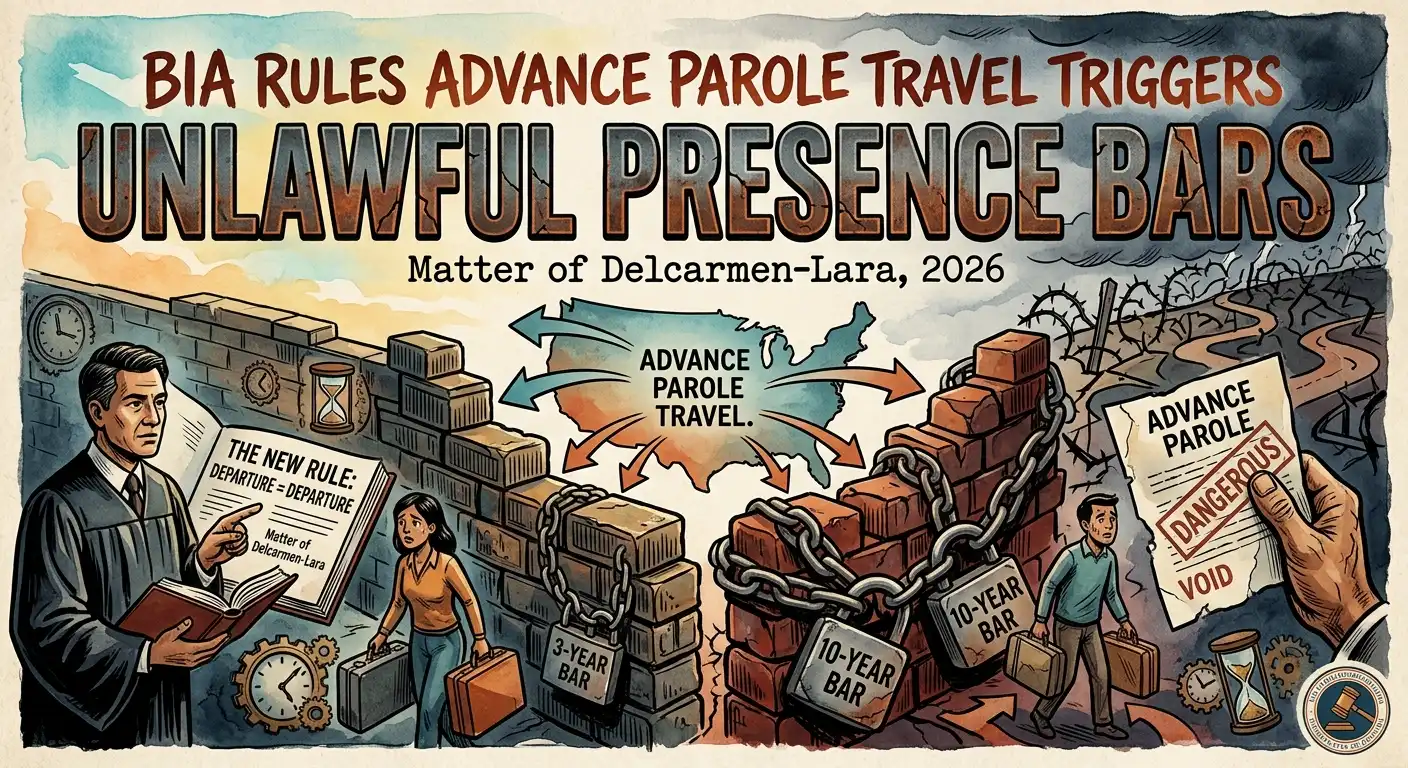
BIA Rules Advance Parole Travel Triggers Unlawful Presence Bars.
On August 13, 2026, the Board of Immigration Appeals (BIA) issued a major precedent decision, Matter of Delcarmen-Lara, which fundamentally increases the risk of international travel for certain immigrants.
The decision strips away a 14-year-old safety protection, ruling that traveling outside the United States on Advance Parole now officially counts as a “departure”. Consequently, leaving the country can automatically trigger “3-year or 10-year reentry bars” for individuals who previously accumulated unlawful presence.
The Legal Shift: Then vs. Now
The core of this ruling is how the U.S. government defines a “departure” under the Immigration and Nationality Act (INA):
- The Old Rule (Matter of Arrabally and Yerrabelly, 2012): For over a decade, the law stated that if you had a travel permit (Advance Parole) and left the U.S. temporarily, it did not count as a legal “departure” for the purpose of triggering unlawful presence penalties. This allowed many immigrants to travel safely and return.
- The New Rule (Matter of Delcarmen-Lara, 2026): The BIA completely reversed this logic. They ruled that the plain text of the law treats an Advance Parole trip exactly like any other exit from the United States. If you leave, you have departed—and the penalty clock instantly starts ticking.
Who is Most Affected?
This ruling directly impacts individuals who hold or are applying for Advance Parole through DACA, Temporary Protected Status (TPS), or pending Adjustment of Status (Green Card) applications, specifically:
- Those with a History of Unlawful Presence: Anyone who entered the U.S. without inspection (unlawfully) or overstayed a visa for more than 180 days before getting their current status.
- The “DACA-to-Green Card” Pathway: Historically, many DACA recipients married to U.S. citizens used Advance Parole to leave and re-enter legally, which cleared their “unlawful entry” and allowed them to apply for a Green Card smoothly. This specific pathway is now heavily restricted and highly dangerous.
Who is NOT Affected?
- Past Travelers: The BIA explicitly stated this ruling applies prospectively, not retroactively. If you already traveled on Advance Parole and returned to the U.S. before August 13, 2026, your past trip is safe under the old rules.
- Immigrants with Clean Histories: If you have always maintained lawful status, never overstayed a visa, or were granted DACA before turning 18 (and never had a gap in coverage), you have not accrued unlawful presence. Therefore, the 3- or 10-year bars do not apply to you.
Direct Summary of Impact
| Aspect | Before August 13, 2026 | After August 13, 2026 |
|---|---|---|
| Is Advance Parole a “Departure”? | No (Safe to travel) | Yes (Triggers penalties) |
| Penalty for 181+ days unlawful presence | None upon return | 3-Year Bar from re-entering |
| Penalty for 365+ days unlawful presence | None upon return | 10-Year Bar from re-entering |
| Application to past trips | Governed by old rules | Not retroactively punished |
Next Steps for Travelers
If you or someone you know has an approved Advance Parole document and is planning a trip, do not leave the United States without consulting a licensed Immigration Attorney to thoroughly review your background check and FOIA records. Departing the country without a strategy could result in being blocked from returning or being forced to apply for extreme-hardship waivers (Form I-601).